The Great Pacific Garbage Patch: A Sustainable Solution from an ESG Perspective - Part I
Last time, we talked about the harmful effects of excessive packaging.
Today, let’s move from the producers and consumers to the ultimate carrier of the burden:
The ocean.
I. Overview of the Great Pacific Garbage Patch (GPGP)
Why GPGP?
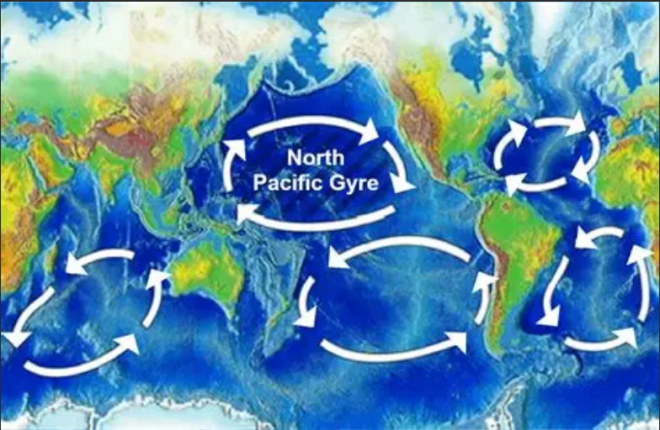
Because the Great Pacific Garbage Patch (GPGP) represents one of the most visible symbols of our global plastic pollution crisis. Stretching across the North Pacific Ocean between Hawaii and California, it is a great accumulation of garbage trapped by the North Pacific Subtropical Gyre -- a system of rotating ocean currents trapping floating debris after wastes are disposed, leading to the formation of the patch.

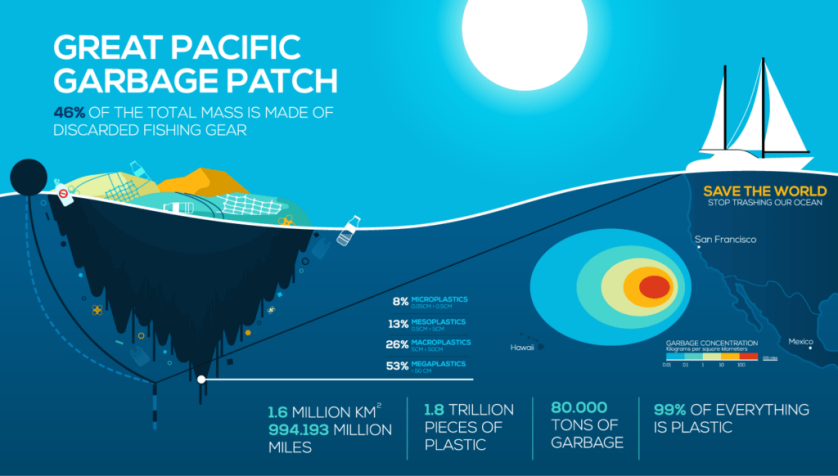
Currently, the Great Pacific Garbage Patch is still accumulating. Recent research estimates the GPGP contains approximately 1.8 trillion pieces of plastic with a total weight of around 80,000 tons -- about the weight of 500 jumbo jets.
While larger items like discarded fishing nets and plastic bottles account for over 90% of the patch's mass, the vast majority of pieces by count are microplastics -- tiny fragments smaller than 5 millimeters.
These microplastics result from the degradation of larger plastic items (macroplastics) due to UV radiation, mechanical abrasion, and other environmental factors. Studies have estimated that microplastics accounted for 94% of the pieces. Microplastics can cause severe health damages to marine animals and they will ultimately cause irreversible consequences to individual health, which we will discuss in the next part.

II. Environmental and Health Impact Analysis
Environmental Impact
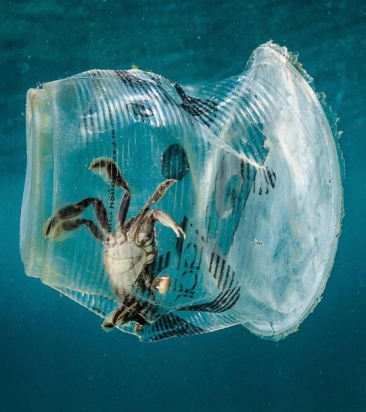
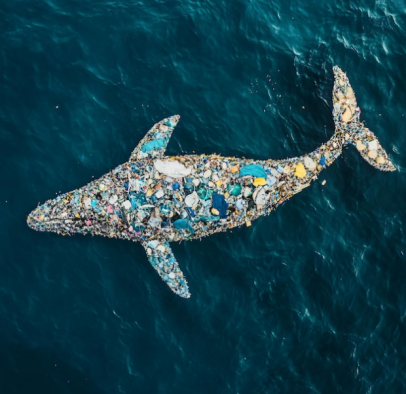
The environmental consequences of the GPGP are severe and multifaceted. Marine life—including fish, seabirds, turtles, and marine mammals—suffers from both ingestion and entanglement. Discarded macroplastics can trap or in some cases suffocate marine species, create a phenomenon known as "ghost fishing." Also, plastics, especially microplastics, can be mistakenly consumed by small fishes and shrimps, which could result in diseases and death because of the toxic substances from the plastic fragments. Studies show that entanglement and ingestion affect over 700 marine species, including endangered populations like sea turtles and monk seals.
The threat extends beyond visible harm -- microplastics can be accumulated throughout the food chain. When small marine species are consumed by secondary consumers or top predators, toxins become concentrated as they move up the food web -- a process known as biomagnification -- which could severely affect top predators, such as sharks, seals, and seabirds.
There is solid evidence on biomagnification. A case study shows that 90% of seabirds have plastic inside their bellies. Alarmingly, the number may grow up to 99% in 2050, threatening over 70% of the marine species. Another study discovers that microplastics are present in 68% of examined specimens, with higher concentrations in predatory fish. Remember that these studies focus on plastic accumulation on a global scale, including water that are not seriously affected by plastic accumulation. In a specific area with visible plastics floating on the ocean, such as the GPGP, the results may be beyond imagination.

The effects extends beyond ocean. The breakdown of plastic release greenhouse gases, which drives climate change.
Moreover, recent research has also revealed a climate connection: microplastics interfere with the ocean's carbon cycle, disrupting the "biological pump", which is a natural process that agents such as zooplankton consume or “trap” carbon-rich particles and sequester carbon deep in the ocean. According to this research, this interference could reduce carbon export in the GPGP by 30-65%, equivalent to 7-13 million metric tons of carbon per year.
Human health impact
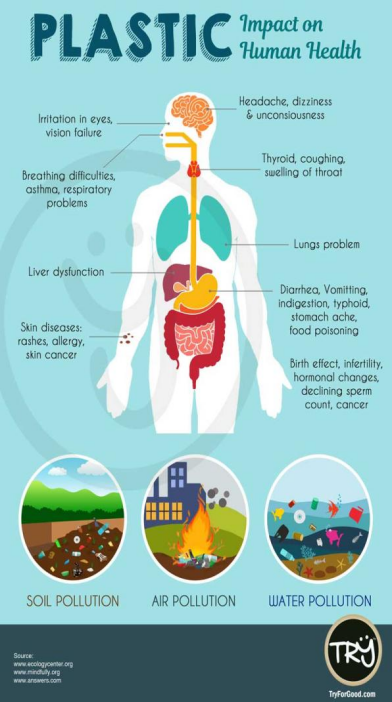
For human health, the risks stem primarily from the chemicals associated with plastics. Many plastics contain endocrine-disrupting compounds (EDCs) like Bisphenol A (BPA) and phthalates, which are linked to cancers such as breast and prostate cancer. Plastics may also contain Persistent Organic Pollutants (POPs) like PCBs, which are classified as carcinogens linked to liver cancer, kidney cancer, and non-Hodgkin lymphoma. One study finds that people in some countries consume more than 15 grams of plastics per month, and, regardless of countries, most plastic ingestion comes from seafood. Thus, the plastic we threw out may come back thanks to biomagnification -- we will taste our own medicine in the end.
III. Stakeholder Analysis and Roles
Addressing the GPGP requires coordinated action from diverse stakeholders, each with distinct capabilities and responsibilities.
Governments and Supranational Organizations hold the power to enact and enforce regulations. The UN Global Plastics Treaty, currently under negotiation, is a critical opportunity to establish legally binding commitments to reduce plastic production and improve waste management. National policies like the U.S. Marine Debris Act enable research and mitigation efforts. However, challenges also exist -- enforcement remains weak, and the patch's location in international waters creates jurisdictional challenges.
Non-Governmental Organizations (NGOs) are crucial and imperative to the solution. For example, the Ocean Cleanup, founded by Boyan Slat in 2013, has already removed over 29 million kilograms (64 million pounds) of trash from aquatic ecosystems worldwide. NGOs are the most diligent practitioners, present in pollution sites all around the world to remove plastic pollution. Unfortunately, the power is still limited -- more NGOs and kindness are needed.
Corporations are both contributors and potential solution-providers. Major consumer goods companies are responsible for most uses of single-use plastic, but companies dedicated to reduce plastic usage and dumping also begins to emerge. Technology companies like Amazon Web Services (AWS) are now contributing their AI and cloud computing expertise to enhance plastic detection and cleanup efficiency.
The Fishing Industry is a significant contributor. Approximately 80% of the plastic caught in the GPGP comes from fishing activities (for example, fragments of fishing nets can break up and enter seas and oceans), making them a critical stakeholder for interventions and solutions.
The General Public acts as both consumers and citizens. Individual choices can shape demand, while public pressure can drive policy change towards sustainability.
IV. An ESG Perspective: Analysis of Current Solutions
Evaluating current solutions through an ESG (Environmental, Social, Governance) lens reveals both progress and persistent gaps.
- Environmental: Cleanup Technologies
Recent assessments have found that cleanup operations, represented by The Ocean Cleanup's System 03, generate more environmental benefits than costs. Moreover, advanced technologies, including LTE private wireless networks from Nokia and AI-driven detection systems from AWS, now enable real-time monitoring, hotspot hunting, and marine life protection.
However, significant limitations remain. Current systems primarily capture surface-level macroplastics, while microplastics remain elusive. Concerns about bycatch (accidentally capturing marine life) require continuous monitoring. Cost-per-kilogram remains high, and challenges on energy supply are present with systems in remote locations.
- Social: Education and Awareness
Social initiatives have raised awareness but face the diffusion of responsibility -- individuals feeling disconnected from the environmental problems. Campaigns have shifted some consumer behavior, yet the scale of the problem means awareness alone cannot solve the crisis.
- Governance: Policy Frameworks
From a Governance perspective, policy efforts are maturing but remain fragmented. While bans on single-use plastics and are growing, implementation varies widely by country, and international agreements move slowly. Negotiations continue while plastic production accelerates. Policy variation among regions create chances to elude environmental responsibility. International corporations, for example, can relocate factories to regions with looser environmental laws to avoid bearing financial and environmental costs -- a phenomenon commonly known as carbon leakage.
The ESG Gap
From an ESG perspective, the most significant gap is systemic integration. Environmental cleanup efforts are limited and, more importantly, operate largely separately from Social behavioral change programs and Governance frameworks. Corporate sustainability reporting remains inconsistent, with companies using different frameworks and standards. A coordinated approach addressing the entire plastic lifecycle—from production to disposal to remediation—remains elusive.